
A Curated List of Midlife Wellness Books, Podcasts, and Tools
Books
I love books that combine solid science with practical advice—especially those that demystify health, aging, hormones, and lifestyle changes in midlife. These reads are not only informative, but also empowering, helping you make better choices for your body, brain, and overall well-being.
The Hormone Cure* by Sara Gottfried, MD*
I wasn’t sure I was going to recommend this book — but by the time I finished it, I had nearly 60 Post-it notes marking sections I found genuinely interesting and useful. The Hormone Cure lays out Dr. Gottfried’s approach to balancing hormones naturally and is packed with clear explanations of how hormones work, what can happen when they’re out of balance, and why those shifts often show up in midlife.
What I appreciate most is that it doesn’t stop at theory. The book offers practical lifestyle changes you can experiment with to positively impact your health. There aren’t many comprehensive, approachable books focused on women’s health, and this is a solid jumping-off point if you’re not quite feeling like yourself. The underlying message is empowering: with the right knowledge and support, it is possible to feel better — and even fabulous — in midlife.
Outlive* by Peter Attia, MD*
Outlive lays out a clear framework for extending your healthspan — not just living longer, but living well and functioning disease-free for as long as possible. Dr. Attia covers the foundational pillars of long-term health, including the critical role of exercise, the impact of nutrition, the importance of sleep, and the often underrepresented area of mental health.
What sets this book apart is its attention to differences between men and women, along with thoughtful discussion of health considerations that are especially relevant for women. If you’re looking for a deeper understanding of how daily choices shape long-term health — and some motivation to make meaningful changes — this book delivers.
I also appreciate Dr. Attia’s writing style and interviews. The practical strategies woven throughout make Outlive a very useful, actionable guide rather than just a theoretical read.
JOYSPAN: The Art and Science of Thriving in Life's Second Half by Kerry Burnight, PhD
This book reframes the way we think about aging—shifting the focus beyond lifespan and healthspan to what Dr. Burnight calls joyspan: the satisfaction and joy we get out of our lives, and why that truly matters.
Built around four pillars—*Grow, Adapt, Connect, and Give* "Joyspan" offers practical tools, fresh perspective shifts, and an uplifting tone. It’s a quick, energizing read that leaves you with a genuine feel-good boost, reminding us that aging is about thriving, not just surviving.
If you’re in midlife reflecting on your path and wondering how to live more fully, this book is a meaningful, empowering guide.
Unbreakable: A Woman’s Guide to Aging with Power by Vonda Wright, MD
Unbreakable is a powerful reminder of just how essential strength and movement are to women’s health as we age. Dr. Vonda Wright—an orthopedic surgeon and longevity specialist—puts the spotlight on gaining strength, while showing how the other pillars—*nutrition, lifestyle, and supplements*—are just as important to support it.
What makes this book so valuable is its blend of science and practicality. You’ll find an exercise guide, body-supporting recipes, and plenty of research for those who want to dig deeper. It’s equal parts motivation and manual—proving that aging strong isn’t just possible, it’s something you can actively create.
I keep this book close by as a go-to resource for my strength workouts, and it’s an excellent starting point if you’re not sure where to begin.
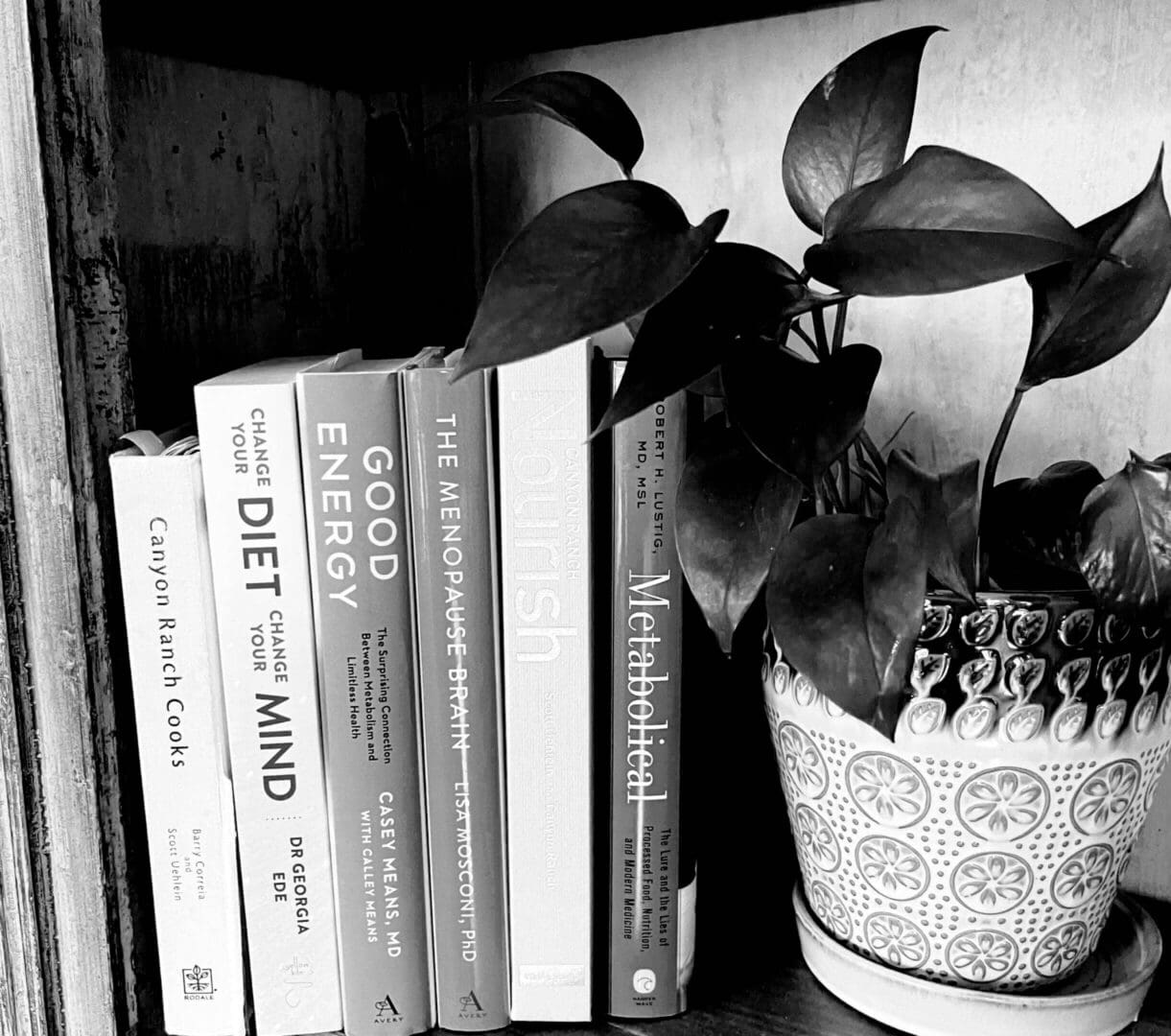
"Good Energy" by Casey Means, MD, with Calley Means
I keep this one close by as a go-to reference—especially after getting blood work done. It breaks down optimal ranges for things like cholesterol, hormones, and key vitamins in a way that actually makes sense. Even better? It offers practical, science-backed suggestions to support your health and lifestyle goals.
"The Menopause Brain" by Lisa Mosconi, PhD
This book breaks down the science behind midlife changes—especially how your brain and hormones are connected. It offers actionable tips (my favorite part!) and reinforces the idea that diet and lifestyle choices really do make a big difference in how you feel.
"Food As Medicine Everyday" by Julie Briley, ND & Courtney Jackson, ND
Food As Medicine Everyday is your roadmap to eating with purpose—loaded with whole food lists, easy recipes, and the science behind how they help your body thrive. It also spills the tea on the not-so-great additives and ingredients to ditch if you want to feel your best.
"Metabolical" by Robert H. Lustig, MD, MSL
“Metabolical” helps you understand the challenges of today’s food landscape—especially the impact of processed foods on our health. While there is a lot of information to sift through, it’s all aimed at helping you take back control and make smarter choices.
FOOD: What the Heck Should I Eat?By Mark Hyman, MD
Dr. Mark Hyman has become a familiar voice in the conversation about using food as medicine. With so much conflicting nutrition advice out there, this book helps cut through the noise. Hyman takes you through each food group, explaining the science, unpacking confusing studies, and highlighting the best choices for long-term health.
What makes this book especially helpful are the actionable tasks and clear food lists that make healthy eating feel doable instead of overwhelming. Drawing from years of treating thousands of patients, Hyman shows how simple dietary changes can transform health outcomes.
One of the most interesting takeaways is how Dr. Hyman developed his Pegan Diet philosophy. After seeing that popular approaches like paleo and vegan each had valuable but incomplete pieces, he combined the best of both into a powerful, balanced framework. Throughout the book, he explains how this “Pegan” approach emphasizes whole, nutrient-dense foods while cutting back on processed ones—making it easier to put science into practice in your everyday life.
FOOD: What the Heck Should I Cook?By Mark Hyman, MD
This companion cookbook to Dr. Hyman’s FOOD: What the Heck Should I Eat? brings his nutrition philosophy to life with over 100 recipes that put the principles into practice. Every recipe is gluten-free and low-glycemic, with many also being grain- and dairy-free. Handy icons help you quickly spot which recipes fit your needs, making it simple to cook in line with your goals.
What I love about this book is that it doesn’t just tell you what to eat—it shows you how to do it in real life. From flavorful mains to healthy condiments (goodbye, store-bought mayo and ketchup with hidden additives!), the recipes make it easier to stay consistent. At the end, you’ll even find a nutritional analysis index to guide you if you’re focusing on specific aspects of eating. Personally, I’m excited to try his no-bake mini cupcakes with Honey Vanilla Buttercream—no refined sugar, no flour, and plenty of midlife-friendly deliciousness.

Apps
These apps have been game-changers in supporting my midlife health—from tracking habits and sleep to managing stress and staying active. I’ve found them easy to use, motivating, and genuinely helpful in turning good intentions into lasting habits.
Gratitude: Self-Care Journal by Hapjoy Technologies
While I’m a big believer in the benefits of handwriting for journaling, I know it’s not practical for everyone. This app makes daily journaling simple and accessible — you can even add photos — and it offers multiple ways to build a consistent gratitude practice.
Recently, my husband asked me for the one health and wellness habit I’d recommend he try. My answer, without hesitation: a gratitude journal. Just a few minutes a day has been scientifically shown to help rewire the brain toward positivity, making it easier to notice what’s going well instead of what isn’t.
Beyond journaling prompts, this app includes thoughtful extras I really like, including daily affirmations (which you can save into personalized folders), vision boards, and gentle suggestions for reframing unhelpful thoughts. That reframing aspect aligns closely with my approach to goal-setting — creating goals that are realistic, supportive, and achievable in midlife.
You can try the app free for 7 days to see if it’s a good fit for you.
Daily Habit Tracker by Gritty Apps
We all have those habits we know would make us feel better — but actually sticking with them is the hard part. This app helps bridge that gap by making daily habits feel manageable instead of overwhelming.
I like using Daily Habit Tracker for simple goals like drinking more water, moving my body consistently, or breaking less helpful patterns like stress scrolling. The design is intuitive and flexible, which makes it easier to stay consistent without feeling pressured or judged.
There’s a free version to get started, with optional upgrades if you want more features. If you’re someone who benefits from gentle structure and visual progress — especially in midlife, when routines can feel harder to maintain — this can be a useful tool to experiment with.
Breathwrk
Breathwrk is like having a personal breathing coach in your pocket. With just five minutes a day, you can reduce stress and anxiety, boost focus and energy, or ease into better sleep—all through guided breathwork sessions. I love how customizable it is: you can set reminders for morning, midday, or night, and even take a lung capacity test so the app can personalize your breath timing. It’s a simple, science-backed way to take charge of your nervous system. While there’s a cost after the free one-week trial, I think of it as an investment in one of the most powerful (and overlooked!) tools we all carry with us—our breath. Need more of a nudge? Check out my breath blog to learn why this health hack is especially important in midlife.
Noom
For my midlife ladies who feel like they’ve “tried everything” when it comes to weight loss, Noom takes a refreshingly different approach. Instead of quick fixes, this app digs into the psychology of eating—helping you understand your habits, triggers, and mindset around food. Noom teaches you to build lasting changes by addressing the why behind your choices, not just the what. While I’m not currently using it myself, I love how it aligns with my belief in the powerful connection between the mind and gut. If you’re curious about how emotions and eating intertwine, check out my blog Midlife Gut Check: Emotions, Eating Habits, and the Gut’s ‘Memory’. Noom might just give you a new perspective on your journey.
Yuka
Yuka is my go-to app whenever I’m at the grocery store—or even in the beauty aisle. With a quick barcode scan, it rates products and breaks down whether they contain harmful ingredients, giving you clear, detailed explanations. For anything that doesn’t pass the test, Yuka suggests healthier alternatives, which makes swapping so much easier. It’s especially eye-opening for personal care items (spoiler: some “clean” brands aren’t so clean). Yuka doesn’t sugarcoat it—you get the straight truth about what’s in your products, making it simple to choose better options for your family’s health and happiness.
Calm
Calm is one of my favorite mindfulness apps, and there’s a reason it’s consistently rated among the best. It offers a wide range of tools—from meditations and breathing exercises to music, soundscapes, and even bedtime stories. You can create a personal action plan to help with anxiety, stress, focus, or sleep, depending on what you need most. Personally, I love turning to Calm at night when my mind won’t shut off—it helps me release the day and reset. With so many resources to explore, there’s something here for everyone. While the app isn’t free, you can explore its offerings with a free trial before committing.
Calm Sleep
Calm Sleep takes all the soothing support of Calm and zeroes in on one thing: better rest. The app is filled with guided practices, relaxing soundscapes, and sleep-friendly music designed to help you unwind and drift off. It even offers tips for creating a healthier sleep environment, plus a handy timer that shuts off once you’re (hopefully) asleep. For me, it’s like having a sleep coach in my pocket—ready to quiet the noise and ease me into a more restorative night. Like Calm, it requires a subscription, but you can try it out first with a free trial before deciding if it’s worth the investment.
Lose It! – Food & Nutrition Tracking App
My go-to app for tracking food, weight, and health trends. Lose It! holds years of my data, helping me connect how I feel with what I eat. It’s fully customizable—you can focus on the macros or nutrients that matter most to you. I especially love the built-in insights and reminders when patterns emerge. With helpful articles and tools along the way, it’s more than a tracker—it’s a daily guide for better choices.
Habitica by HabitRPG, Inc. (Habit Tracking with Built-In Accountability)
If you’re trying to build better habits—or break a few that no longer serve you—Habitica turns the process into something more engaging and easier to stick with.
You add the habits, routines, and goals you want to work on, and the app “gamifies” the experience. Completing tasks earns rewards, unlocks features, and keeps you moving forward in a way that feels different from a standard checklist.
There’s also a built-in social component. You can join groups or add friends for accountability, which can make a big difference when motivation dips.
While there are optional in-app purchases, the free version is more than enough to get started and stay consistent.
Best for:
- Building new routines
- Staying consistent with small daily habits
- Breaking habits that no longer serve you
- Adding structure without feeling rigid
It’s a simple way to stay consistent—especially when motivation alone isn’t enough.
Best suited for those who benefit from a more game-like approach to building habits*.*
Podcasts
Podcasts are my go-to for learning on the move—whether I'm walking, driving, or doing chores. These episodes helped me understand my health better and offered clear, actionable tips that made a real difference in how I feel day to day.
Mind Body Green, Episode 368 with Dr. Shelby Harris, PsyD, DBSM
🎧Sleep Solutions with Dr. Shelby Harris
This episode is an oldie but an important goodie. Sleep (or lack of it) is a hot topic for all of us, and Dr. Shelby Harris—who specializes in insomnia and is the author of The Women’s Guide to Overcoming Insomnia: Get a Good Night’s Sleep Without Relying on Medication—offers insightful, realistic guidance for improving both the quality and quantity of your rest.
She discusses sleep apnea, why sleep differs for men and women (hello, hormones), and how your night’s rest actually begins with your mornings ( read my Morning Sunlight blog here). Dr. Harris also shares practical ideas for nighttime routines and thoughtful strategies for special situations like travel and raising children.
Her advice feels realistic, compassionate, and incredibly useful for women who don’t feel they’re getting the restorative sleep they need. At just under an hour, this episode is well worth a listen if better sleep is on your wish list.
The Peter Attia Drive — Ep. 348
Women’s Sexual Health, Menopause & Hormone Therapy (with Rachel Rubin, MD)
If you’re in perimenopause (or not sure yet) or navigating postmenopausal symptoms and feel like you’ve tried every “natural” fix, this conversation is worth your time. Urologist and sexual-health specialist Rachel Rubin, MD, explains what hormone replacement therapy (HRT) is—and what it isn’t—while also shedding light on why women’s health has historically been under-studied. She shares practical guidance on how to advocate for yourself, what questions to ask, and how to find a provider who truly understands the needs of women in midlife.
The episode covers common symptoms and timelines and discusses when it might make sense to consider HRT. Rubin also breaks down the options—estrogen, progesterone, and testosterone—along with delivery methods and safety basics. Beyond hormones, the conversation touches on pelvic and vaginal health and how to identify a clinician who is truly knowledgeable in women’s sexual health.
Note: This episode is for information only. Always talk with your own healthcare provider about what’s right for you.
Huberman Lab Essentials: Timing Light for Better Sleep, Energy & Mood
August 21, 2025 · 35 minutes
This shortened version of a Huberman Lab podcast highlights just how powerful natural light can be for our health. Guest Dr. Samer Hattar explains how light acts as a daily reset button for our circadian clock, helping us function at our best. When your body feels out of sync—which can be common in midlife—exposure to natural light is one of the simplest and most effective tools to restore balance.
If you’ve ever struggled with energy dips, mood swings, or restless nights, this episode gives you science-backed reasons to step outside and let the light work its magic. Pair it with
my blog on morning light for a practical, natural method to feel more aligned and energized.
Look, Feel, & Stay Young Forever: #1 Orthopedic Surgeon’s Proven Protocol — The Mel Robbins Podcast
If you want a taste of Dr. Vonda Wright’s wisdom before diving into her book Unbreakable, this episode of The Mel Robbins Podcast is a must-listen. Mel interviews Dr. Wright about the science of aging well, and the conversation is packed with actionable steps to slow aging, boost energy, and improve happiness.
What stands out most is Dr. Wright’s emphasis on the *mindset shift*—the often-overlooked key to healthy aging. She also shares practical advice on how to get started with strength training, making it approachable no matter your current fitness level.
I paired this episode with her book, which goes deeper into her whole-body strength protocol. Together, they make a motivating and practical guide for midlife women ready to take charge of their health.
“The Essential Menopausal Toolbox” – The Resetter Podcast (Season 5, Episode 243) with Dr. Mary Claire Haver
This empowering episode dives into what every woman needs to know about menopause. Dr. Mary Claire Haver breaks down the science behind hormonal shifts and shares actionable tools to navigate midlife with confidence. It’s a thoughtful conversation about education, myth-busting, and reclaiming your health during menopause and beyond.
“Anti-Aging Expert on How Missing This Vitamin Is As Bad As Smoking” – The Diary of a CEO (July 28, 2025) with Dr. Rhonda Patrick
In this in-depth episode, Dr. Rhonda Patrick—a leading voice in the science of aging—dives into the critical role of nutrition and lifestyle in longevity. From the shocking impact of vitamin deficiencies to the underrated benefits of creatine, Dr. Patrick shares evidence-based strategies to improve your healthspan. She also covers powerful topics like fasting, exercise, red light therapy, saunas, and the risks of microplastics. It’s a long listen (just under 3 hours), but the timestamps make it easy to jump to the topics that matter most to you.
“Using Your Mind to Control Your Physical Health & Longevity” – Huberman Lab Podcast with Dr. Ellen Langer
In this fascinating conversation, Dr. Ellen Langer—often called the “mother of mindfulness”—explores how the mind-body connection directly impacts health, aging, and longevity. She and Andrew Huberman dive into the science of how shifting your perspective can influence everything from stress to physical outcomes.
What I love most is Dr. Langer’s clear explanation of mindfulness and how simple awareness practices can improve everyday health and happiness. If you’re feeling frustrated with midlife changes—whether in health, relationships, or just how you see yourself—this episode offers a refreshing perspective. Many of her insights tie beautifully into my blog on the gut-brain connection, reminding us just how powerful the mind truly is in shaping our well-being.
Insights on Psychiatry — NYU Langone | Dr. Richard Davidson
Mindfulness & Meditation- Building Resilient, Balanced Lives
Dr. Davidson is widely regarded as one of the pioneers in the scientific study of mindfulness and meditation, and his work has helped bridge the gap between ancient contemplative practices and modern neuroscience. If you enjoy this conversation, you can also find him featured on many other podcasts across the web, and he offers several free guided meditations on YouTube.
One of the most interesting parts of the episode is his discussion of the four pillars of well-being: Awareness (mindfulness), Connection (gratitude and appreciation), Insight (self-knowledge) and Purpose (understanding what drives you and your sense of direction).
These ideas resonate strongly with many of the themes we explore here at My Midlife Mix. In fact, the connection between mindfulness, emotional regulation, and well-being is something I talk about more in my post about the midlife nervous system.
The episode is conveniently time-stamped, so you can jump to sections that interest you most. I also appreciated his discussion toward the end about *“micro-practices”*—small supports that can be done in as little as a minute to help reset your mind and body throughout the day.
It’s a thoughtful listen and a great reminder that supporting your well-being doesn’t always require major life changes—sometimes the smallest practices can have the biggest impact.
The Mel Robbins Podcast — Dr. Shereene Idriss
The Ultimate Skincare Routine for Amazing Skin, February 26, 2026
Dermatologist Dr. Shereene Idriss joins Mel Robbins to talk about what really influences how (and when) our skin ages. One of her most interesting points is that about 80% of how we age is influenced by habits, while genetics account for a much smaller portion.
She explains how our skin often reflects what’s happening internally, including stress levels, sleep quality, and overall health. Her top lifestyle habits for healthier skin are refreshingly simple and are the same foundational habits that show up again and again in midlife wellness conversations —something I talk more about in my midlife skincare guide.
Another helpful part of the conversation is her explanation of when major skin changes tend to happen. Many people notice their first shifts in their late 20s or early 30s, as collagen slowly declines. Additional changes often appear around the mid-40s and again in the early 60s.
What I appreciated most about this conversation is the reminder that caring for your skin isn’t just about products—it’s also about preparing mentally for the natural changes that come with aging and focusing on the habits that support health from the inside out. The conversation is packed with practical insights and is well worth a listen.
Why 80% of People Are Metabolically Broken
The Beyond Tomorrow Podcast — Interview with Dr. Amy Killen
There aren’t many podcast interviews that pull together this many important health topics in one clear, grounded conversation—especially in a way that actually applies to midlife. That’s what makes this one worth saving.
In this episode, Dr. Amy Killen connects the dots between metabolic health, hormones, and the underlying factors that are quietly impacting how many of us feel day to day. The conversation moves through the effects of chronic stress, environmental toxins and endocrine disruptors, and why foundational habits like sleep, sunlight, and circadian rhythm matter more than most people realize.
What stands out is how much this reinforces the same areas I come back to here on My Midlife Mix.
Reconnecting with nature.
Stepping away from constant technology.
Supporting your nervous system instead of running on stress.
Using simple tools like breathwork and even cold exposure to build resilience.
None of it is extreme—but all of it matters.
If you’re trying to better understand what’s actually driving your health in midlife—and where to focus—this is a well-rounded, worthwhile listen.
If you want to explore these ideas further, you’ll find deeper dives on many of these topics throughout the blog.