Why Midlife Sleep Requires a New Strategy
Sleep becomes a major focus in midlife — not because we suddenly care more about it, but because for many women, it starts to unravel. Hormonal shifts during perimenopause and menopause create a cascade of changes that can quietly (or not so quietly) disrupt sleep that once came easily.
What used to be “no big deal” — a glass of wine, a late dinner, scrolling in bed — can suddenly have an outsized impact. Our bodies become more sensitive, both inside and out, and without adjusting alongside those changes, sleep quality often suffers.
Sleep, however, is not optional. It’s how our bodies repair, rebuild, and reset each day. Without consistent, restorative sleep, the risk for illness, cognitive decline, mood disruption, and physical limitations increases. Supporting sleep in midlife isn’t indulgent — it’s foundational.
In my first sleep blog, I share several simple ways to encourage better sleep, including reducing alcohol, cooling your bedroom, keeping a consistent sleep and wake time, and dimming lights in the evening to signal your body that it’s time to wind down. You can explore those ideas and more here:
Struggling to Sleep in Midlife? Here’s What Really Helps
But knowing what supports sleep is only part of the equation.
Why Consistency Matters More Than Occasional Sleep Fixes in Midlife
Once you understand what supports better sleep, the next — and often missing — step is consistency.
Many of us try to improve sleep by adding things in randomly: a sleep mask one night, an early dinner once in a while, morning sunlight on a good day. While each of those tools can help, they won’t create lasting change unless they’re practiced regularly. Midlife bodies are especially sensitive to inconsistency.
Our nervous system, hormones, digestion, and circadian rhythm all rely on predictable signals. When your body knows what’s coming next, it can prepare — and that preparation is what allows you to fall asleep more easily and stay asleep longer.
Research supports this idea. A large study published in Sleep and summarized by Psychiatrist.com found that regular sleep-wake timing was more strongly associated with health and longevity than simply spending more hours in bed. In other words, when it comes to sleep, when and how consistently you sleep may matter more than chasing a perfect number of hours.
This helps explain why midlife sleep can feel so fragile. Hormonal shifts already make our systems more reactive, so irregular habits — late nights, skipped meals, inconsistent routines — can send mixed signals that make it harder for the body to settle.
Consistency gives your body the signals it needs — which is why routines need to be personal. The best sleep routine isn’t the one you read about — it’s the one that fits your life, your preferences, and your body. When routines feel doable and even enjoyable, they’re far more likely to stick.
Consistency only works if you know what’s actually helping — and what’s working against you.
And in midlife, that’s not always obvious.
That’s where journaling becomes one of the most useful tools you can use.
How Journaling Helps Improve Sleep
Once you understand that consistency matters, the next question becomes:
Which habits are helping your sleep — and which ones are getting in the way?
Journaling helps you see what’s actually working — and what isn’t.
Sleep doesn’t exist in isolation. It’s influenced by what you eat, when you eat, how much you move, how stressed you are, how much light you get, and how consistently you follow the same rhythms each day. A lifestyle journal helps you step back and see those connections instead of guessing.
When I was struggling with sleep during perimenopause — waking with hot flashes and lying awake in the middle of the night — journaling helped me connect my daytime habits with how I slept at night. By keeping a simple food journal and tracking my sleep, I began to notice patterns I would have otherwise missed.
For example, on days I consistently ate foods containing natural melatonin as an afternoon snack, my sleep was deeper. Alcohol, on the other hand — even small amounts — reliably disrupted my sleep. Keeping track of my sleep and wake times also showed me that consistency mattered far more than I realized.
Yes, I use tools like my Oura Ring now, and I’ve used an Apple Watch in the past. But you don’t need any device to benefit from journaling. One of the most effective tools available to all of us is mindfulness — simply paying attention to how you feel and how your body responds.
In a world that constantly pulls our attention outward, journaling brings it back inward. You are, in many ways, your own best data source.
If you want a simple place to start, you can scroll down for a printable Lifestyle Sleep Journal to help guide what to pay attention to.
Using a Lifestyle Journal to Notice Patterns
A lifestyle sleep journal doesn’t need to be complicated. Start first thing in the morning by noting how you slept and how you feel upon waking.
Then, throughout the day, record a few key details as they naturally occur.
Pay attention to what you eat and when you eat it.
Note any caffeine or alcohol intake.
Record how much you move and how much time you spend outdoors.
Notice shifts in energy, stress, or mood.
Give yourself one to two weeks of normal life — no forcing new habits and no overhauling routines yet. This initial period helps you establish a baseline. When you look back, notice which nights you slept best and what was consistent on those days. What felt supportive or calming? Those patterns are worth paying attention to.
Once you begin to understand your baseline, you can start making small, intentional adjustments. Try removing or reducing habits that seem to work against your sleep. At the same time, experiment with adding in one calming support in the evening, such as dimming lights earlier, following a consistent wind-down routine, gentle stretching, or breathwork — whatever feels soothing and realistic for you.
Stick with each change for a week or two before adjusting again. This slower, more thoughtful process gives your body time to respond and helps you discover what truly works for you, rather than chasing every new sleep tip.
To make this easier, I created a daily lifestyle sleep journal page you can download (below) and use as a simple guide. It isn’t meant to be permanent or perfect — it’s simply a tool to help you notice patterns so you can begin building routines that genuinely support your sleep.
My Midlife Sleep Routine (An Example — Not a Prescription)
Midlife has taught me that sleep improves most when I focus on what consistently supports my body. What follows is simply one example of how I support sleep throughout the day — not a set of rules, and certainly not a routine anyone needs to copy.
Within ten minutes of waking, I step outside for morning sunlight to help reset my circadian rhythm and support healthy hormone signaling for the day — and the night ahead.
I journal in the morning to gently start my day. It also serves as a buffer before coffee, which I’m intentionally delaying. Movement happens at some point during the day — often outdoors — because exercise reliably helps me feel more naturally sleepy in the evening.
I tend to eat a later lunch and finish eating for the day by mid-afternoon, since my deep sleep is consistently better when I skip dinner. This is simply what works best for me right now and may look very different for someone else.
If I have anything in the evening, it’s a calming drink meant to support sleep. Lately, my favorite has been Peppermint Sleep Milk (you’ll find the recipe in The Mix).
In the evening, I turn screens off at least an hour before bed, dim the lights throughout the house, and treat my skincare and nighttime routine as a form of relaxation rather than another task to rush through. I lower the temperature in the house, settle under my weighted blanket, and give my body clear signals that it’s time to rest.
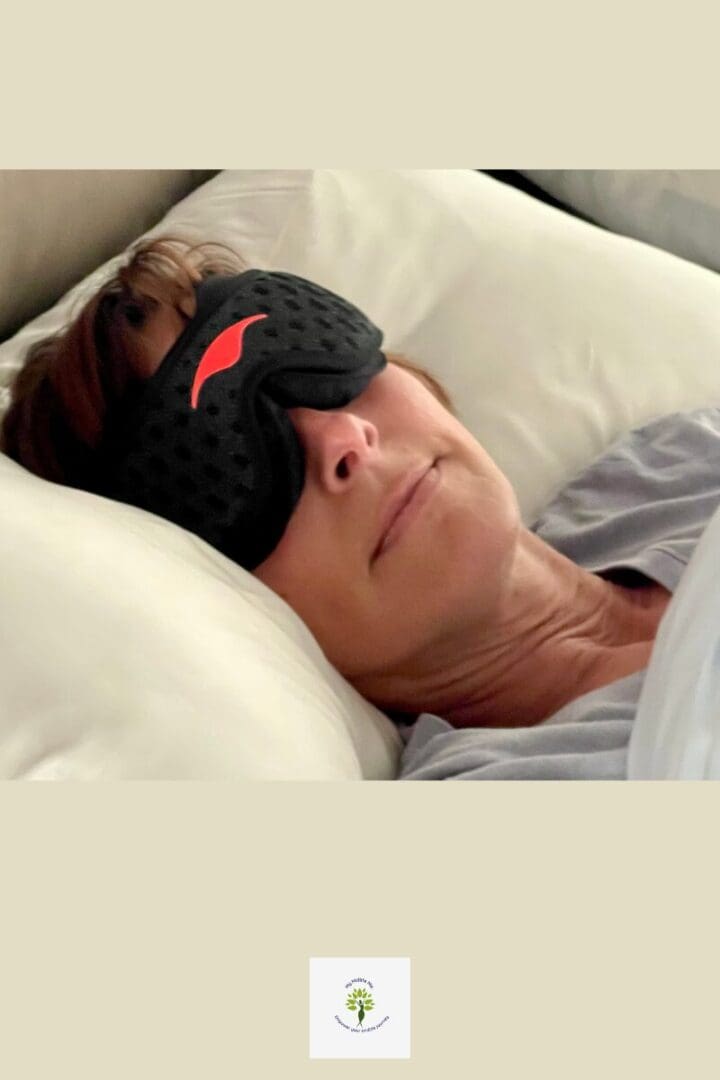
At bedtime, I often listen to a guided meditation or practice breathwork, both of which noticeably calm my nervous system and help lower my resting heart rate. I wear an eye mask and, most nights, sleep through without disruption.
This is my midlife mix.
Because sleep needs can change with seasons, stress levels, and life stages, I’ve also created several example sleep routines and added them to The Mix under the Sleep & Recovery tab. These routines aren’t meant to be followed exactly — they’re there to offer ideas and inspiration as you build a routine that fits your own life.
Sleep Is a 24-Hour Practice — Not Just a Nighttime Routine
Ultimately, one of the most important things I’ve learned about sleep in midlife is that it doesn’t begin at bedtime. Sleep is influenced by what we do all day — how we move, how we eat, how we manage stress, how much light we get, and how consistently we follow the same rhythms.
Midlife also brings change. What once worked may no longer serve you, and that doesn’t mean you’re doing anything wrong. It simply means your body is asking for different support.
The most valuable tool you have is awareness. Paying attention to how you feel — rested or depleted, calm or wired — gives you real-time feedback about what’s helping and what may need adjusting. No tracker or routine can replace that inner signal.
Finding the right sleep routine is a personal process. It often involves trying new habits, letting go of old ones, and allowing your routine to evolve as your needs change. Some tools will feel soothing and supportive; others won’t — and that’s okay.
My hope is that the ideas shared here, along with the example routines in The Mix and the Lifestyle Sleep Journal, give you a starting point. From there, you can begin building a sleep routine that feels supportive, sustainable, and uniquely yours.
Better sleep in midlife isn’t about doing more — it’s about listening more.
If any of this resonates with you, you’re always welcome to join the MMM community. I send occasional emails to share new site updates, blog drops, and tools as they’re added — no noise, no selling.
I also love hearing your feedback. You can reach me anytime at connect@mymidlifemix.com.
If sleep feels hard because your mind won’t settle, you may also find Why Your Nervous System Feels Overwhelmed in Midlife — and What Helps supportive.
And as always, I keep helpful sleep resources — along with tools for other areas of midlife health — collected in The Mix and the Tool Kit for easy, go-to reference.