Cold Plunging for Women: Benefits, Myths, and How to Start Safely
Cold plunging can feel confusing — especially for women in midlife. Depending on what you’ve read, it’s either praised as a powerful wellness tool or warned against as something women over 40 should avoid altogether.
This post isn’t about extremes. It’s about context. I want to explore what the research actually shows, how cold exposure affects the nervous system, and how some women — myself included — use cold plunging thoughtfully and safely as part of a broader midlife wellness routine.
Not as a trend. Just as one possible tool.
Why I Looked More Closely at Cold Plunging
Recently, a few friends and followers reached out after seeing viral posts warning that cold plunging is “bad for women’s health.” The claims? Hormone disruption, cortisol spikes, and blanket advice for women—especially over 40—to avoid cold exposure.
Naturally, I got curious. And after about 10 seconds on Google, I found the study those posts were referencing. It was a small study on young women (average age 23), measuring muscle recovery after intense exercise—not hormones, metabolism, or long-term health outcomes. The results? Cold and heat didn’t significantly improve recovery. That’s a far cry from a blanket warning about cold plunging for all women.
This reminded me why I started My Midlife Mix:
To help women navigate health with context, curiosity, and calm—not fear.
And while it’s smart to question trends, I also want to share that cold plunging has become one of my favorite wellness tools. Not just because of what the research says, but because of what I’ve experienced firsthand—in my mood, my stress response, and even my sleep.
So, let’s dive into what cold plunging really is, what it isn’t, and how to explore it safely and mindfully if you’re curious, too.
What Other Studies Say About Cold Exposure
While that small muscle recovery study grabbed social media attention, there’s actually a growing body of research exploring cold exposure’s impact on the nervous system, mood, metabolism, and overall health.
Let’s look at what science says—beyond sore muscles:
🧠 1. Cold Exposure & Mood Regulation
A 2008 review in Medical Hypotheses proposed that cold showers may help ease symptoms of depression by triggering a release of noradrenaline and beta-endorphins—neurotransmitters known to boost mood.
👉 Cold exposure may activate your brain’s natural “feel-good” chemistry—especially with consistent use.
🫀 2. Nervous System & Resilience
Cold plunging activates the sympathetic nervous system (fight or flight), but over time it also strengthens the parasympathetic system (rest and digest).
This can help improve:
- Heart Rate Variability (HRV)
- Stress recovery
- Emotional regulation
- 👉 Translation: Cold plunging may help build real-world stress resilience—physically and emotionally.
🔥 3. Metabolism & Brown Fat Activation
Cold exposure can stimulate brown adipose tissue (BAT)—a type of fat that burns energy to create heat, especially during cold-induced shivering.
Some studies have found that regular cold exposure may increase BAT activity, which could support metabolic health and insulin sensitivity. One 2014 study (Journal of Clinical Investigation) showed improved glucose metabolism after cold acclimation.
👉 But the research is mixed, especially for women in midlife.
Some evidence suggests perimenopausal women may benefit more than postmenopausal women—unless shivering is triggered, which appears to enhance BAT activation.
Bottom line: Cold exposure might offer metabolic perks—but it’s not a magic fat burner. It’s one potential tool among many, and it works best when paired with other lifestyle habits like movement, sleep, and whole-food nutrition..
🩸 4. Inflammation & Immune Support
Chronic inflammation plays a major role in many midlife challenges—joint pain, brain fog, fatigue, even hormonal imbalances. Cold exposure may help regulate that inflammatory response over time.
Research shows that cold-adapted individuals can produce more anti-inflammatory cytokines, which help the body respond more calmly to stress. For example, in a study involving Wim Hof–trained participants, those who practiced controlled cold exposure and breathwork had a reduced inflammatory response during immune system testing—compared to non-trained individuals.
While we’re still learning exactly how this applies to women in perimenopause and beyond, cold exposure may offer gentle immune and recovery support—especially when combined with good sleep, nutrient-dense food, and stress management.
🌙 5. Menstrual Cycle Support
A 2020 study in the International Journal of Environmental Research and Public Health explored the effects of regular cold water swimming on women’s health—and the findings were encouraging.
Women who consistently swam in cold water reported:
✔️ Reduced menstrual discomfort
✔️ Improved mood and overall well-being
✔️ No disruption to menstrual cycle regulation
👉 While more research is needed, these results suggest that cold exposure may support—rather than harm—women’s hormonal balance and monthly cycles.
Summary: A More Balanced Picture
Cold plunging isn’t a magic fix—but it’s far from dangerous when done mindfully.
The research points to wide-ranging benefits across mood, stress, metabolism, and immunity—especially when used consistently and with care.
Cold (and Heat) Across Cultures: A Legacy of Wellness
Way before cold plunging hit Instagram, cultures around the world used hot and cold exposure for health, resilience, and connection—not aesthetics.
Here are a few time-tested traditions:
🇫🇮 Finland
The classic sauna + ice lake combo is a national ritual, believed to boost circulation, mood, and immunity. It’s social, restorative—and seen as a core part of wellbeing.
🧖♀️ “The sauna is a poor man’s pharmacy.” — Finnish proverb
🇳🇴🇸🇪 Norway & Sweden
Cold lake swims, even in winter, are common. It’s part of friluftsliv—a love of nature in all seasons. The goal isn’t toughness, but joy, vitality, and clarity.
🇯🇵 Japan
In mountain regions, cold river dips and waterfall rituals are used for purification and mental reset—connecting body, breath, and the natural world.
🇮🇸 Iceland
Locals soak in geothermal hot springs, then dip in cold rivers nearby. This contrast therapy supports recovery, energy, and natural balance.
🇷🇺 Russia
In Russia, banya culture mirrors the sauna tradition—followed by snow rolls, ice dips, or cold showers. It’s less about performance and more about cleansing, community, and circulation.
🧠 What We Can Learn
Contrast therapy—whether it’s a cold plunge after a sauna or a cool rinse after a warm bath—might feel new to many of us. But it’s been part of high-longevity cultures for centuries.
It’s a reminder: resilience doesn’t come from hacks or perfection—it can begin in your own bathroom or backyard.
My Experience with Cold Plunging
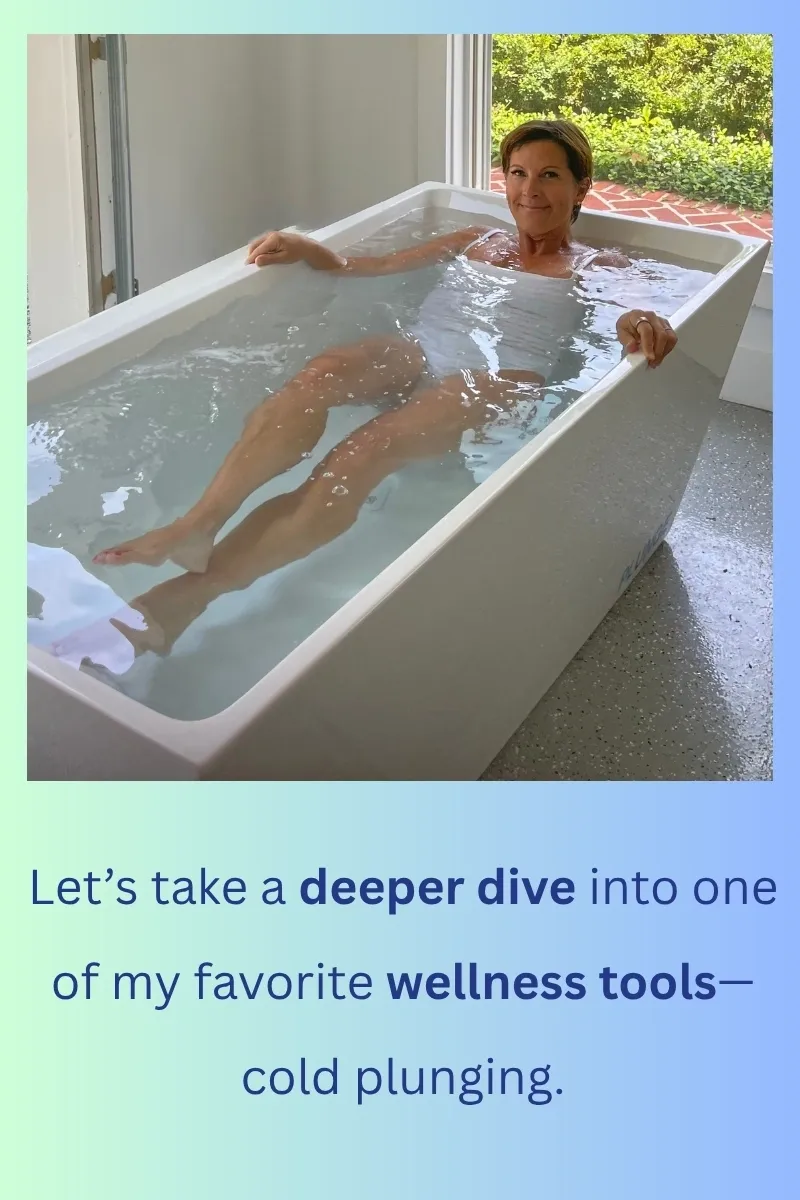
It started as a gift—for my husband.
He’d been listening to a podcast about cold exposure and mentioned it more than once. So I surprised him with a cold plunge tub. He took to it immediately—like it was made for him.
And I’ll admit, I was intrigued. Watching him get in every morning with determination (and occasionally some gritted teeth) sparked something in me.
Maybe it could help with the stress and hormonal shifts I’d been feeling in midlife.
Maybe I just wanted to see what all the fuss was about.
So I tried it.
That First Week…
Let’s just say it wasn’t love at first plunge.
I spent a lot of time pacing in a robe, trying to psych myself up.
I made excuses.
I got in, yelped, and jumped back out.
When I did stay in, it was for maybe a minute—tops.
But something shifted.
I got in more quickly.
I stayed longer.
And—somehow—I started to look forward to it.
Now, cold plunging is a regular part of my routine.
I miss it when we travel or when life gets too busy.
It’s gone from intimidating to essential.
The Benefits I’ve Gained
🧠 Mental Resilience
That shift from dread to ease?
That’s not just willpower—it’s neuroplasticity in action.
Cold plunging trains the mind as much as the body.
Every time I override that initial hesitation and step into the cold, I’m creating new neural pathways—ones that help me tolerate discomfort, stay calm under pressure, and reset after stress.
It’s physical proof that change is possible, even in midlife.
What My Oura Ring Shows
I love a good mindset win—but I also love data. And cold plunging has made a noticeable difference in the numbers I track.
➕ Higher Heart Rate Variability (HRV)
Since plunging 3–4 times a week, I’ve seen a consistent HRV increase.
This reflects how well my nervous system bounces back from stress. A higher HRV = more adaptability and better resilience.
🔽 Lower Resting Heart Rate (RHR)
I’ve also noticed a drop in my resting heart rate—a sign that my cardiovascular system is stronger and my body is recovering more efficiently.
Subtle changes, but powerful markers of long-term health.
Mood & Energy Boost
The surprise benefit? Mood and energy.
Yes, cold plunging is a jolt—but it doesn’t just spike adrenaline.
There’s a calm clarity that follows me into the day. I feel more present, more steady, and better equipped to handle life’s curveballs.
And in midlife? That kind of support is gold.
How You Can Try Cold Plunging Without a Big Investment
You don’t need a $10,000 tub, a high-tech recovery chamber, or a trip to Iceland to experience the benefits of cold exposure. The key isn’t perfection or fancy gear—it’s intentional discomfort. Here are a few easy ways to experiment with cold plunging at home:
🛁 1. Start with a Cold Shower
This is the most accessible (and often most underestimated) place to begin.
- At the end of your regular shower, turn the water to cold for 30 seconds.
- Breathe slowly—focus on long exhales.
- Over time, work your way up to 1–3 minutes.
Bonus: No ice required—just courage.
❄️ 2. DIY Bathtub Plunge
If you’ve got a tub, you’ve got a cold plunge.
- Fill with cold tap water.
- Add a few bags of ice if you’re ready (aim for 50–60°F).
- Sit for 1–3 minutes, gradually increasing duration as your tolerance builds.
Set the mood with music or a breath work track to stay calm and centered.
🧊 3. Beverage Cooler Hack
One of the most popular, low-cost setups:
- Use a 60–100 qt round beverage cooler (like a keg cooler).
- Fill with cold water and ice.
- Step in slowly—it’s perfect for backyards or small spaces.
Bonus: Holds the cold longer and drains easily.
Tips to Make It Work
- Track how you feel, not just how long you stay in.
- Consistency beats duration—even 60–90 seconds a few times a week adds up.
- Focus on the mental shift, not just the physical recovery.
- Know your limits—shivering, numbness, or dizziness are signs to stop.
Cold plunging doesn’t have to be expensive or extreme. It just needs to be intentional.
And if you’re in midlife like me, it’s 100% okay to start slowly and see how your body responds.
Talk to Your Doctor Before Starting Any New Health Routine
Before trying cold plunging—or any new wellness practice—it’s wise to check in with your healthcare provider, especially if you:
- Have cardiovascular issues
- Are pregnant or trying to conceive
- Are managing thyroid or adrenal conditions
- Experience Raynaud’s disease, poor circulation, or nerve sensitivity
- Have a history of anxiety or panic attacks triggered by intense sensations
Cold exposure can offer incredible benefits—but it’s still a stressor. And like any stressor, even a positive one, it should be approached with intention and awareness.
Be Honest About Your Health History
Your doctor might not specialize in cold therapy—but they know your health, your medications, and your body’s baseline. They can help you evaluate whether cold plunging is a smart, safe addition to your wellness routine.
As always, everything I share here is designed to spark curiosity and informed choices—not to replace professional medical guidance.
Wrap‑Up & Key Takeaways
Cold plunging is more than a trend—it’s a time‑tested wellness tool used for stress resilience, mood regulation, and physical health.
Misinformation spreads fast, especially on social media. Always read the actual studies—not just the headlines.
Broader science and surveys—including UCL research and user reports—highlight benefits beyond muscle recovery.
Stay personalized: what works for you might not work for everyone, and that’s okay.
Start simple: cold showers, bathtub dips, or cooler plunges—all valid entry points.
Consult your doctor before starting, especially if you have health conditions.
Cold exposure is just one way to work with your nervous system. If you want a deeper look at why midlife stress can feel so intense — and what actually helps regulate it, you may also like Why Your Nervous System Feels Overwhelmed in Midlife — and What Helps.
Moving Forward
If you’re finding value here and want to stay connected, you’re always welcome to join the My Midlife Mix community. I’ll send occasional notifications when new blogs or tools are published — no spam, no selling.
I’d love to hear from you—
What are you enjoying? What’s confusing? What do you want more of?
Email me any time at connect@mymidlifemix.com.