Midlife Gut Check: Emotions, Eating Habits, and the Gut’s ‘Memory’
We’ve all heard the phrase “trust your gut.” Maybe you’ve felt butterflies before a big moment, a pit of dread in your stomach when something felt off, or even an instant “gut instinct” about a decision. That’s not just a figure of speech—it’s your gut talking to your brain.
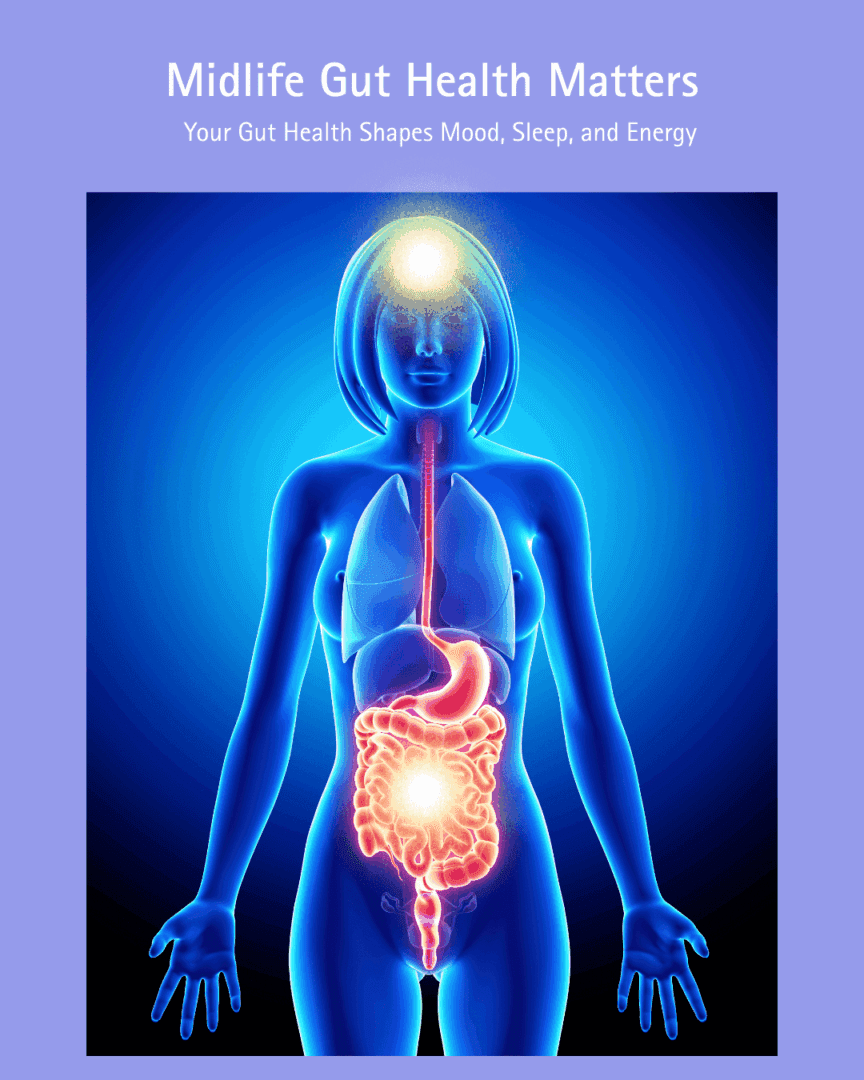
Your gut is central to your nervous system. It’s in constant communication with your brain through the vagus nerve, hormones, neurotransmitters (like serotonin and dopamine), and even your immune system. What happens in your gut doesn’t stay there—it shapes how you think, feel, and respond to stress.
Neglecting your gut shows up in surprising ways: brain fog, low energy, unpredictable cravings, poor sleep, or even mood swings. Just think about how quickly spicy food can spark a brain reaction—your gut alerts, and your brain responds with sweating or scrunching your face. That same two-way street is always at work, whether you notice it or not.
Experts like Dr. Tim Spector, a leading researcher on the gut microbiome, are finding even stronger links between gut health and mood concerns such as anxiety and depression.
And here’s where it gets even more fascinating: your gut holds onto memory. Past traumas, emotions, and stressors can be “stored” in your gut, shaping your eating habits and even influencing weight struggles in midlife.
What Your Gut Microbiome Actually Does
A healthy gut microbiome is like having a built-in health manager. It helps your body regulate cholesterol and support metabolism, train and balance the immune system, and digest food while extracting nutrients. It also produces neurotransmitters like serotonin and GABA, which influence mood and stress response. Your gut creates enzymes that help make vitamins and sends signals through hormones that regulate appetite, blood sugar, and other key body functions.
Nurture your gut, and the brain and body follow.
When the Gut is Off-Kilter
When the gut–brain loop is disrupted, scrambled signals can show up in many ways. Digestive issues such as bloating, constipation, or irregularity are common. Mood concerns including anxiety or low mood often follow. You may also experience insomnia or disrupted sleep, ongoing systemic inflammation, or metabolic issues like insulin resistance and type 2 diabetes. Over time, the imbalance can even contribute to cardiovascular risk factors tied to heart disease and stroke.
Sometimes, these struggles aren’t just about food choices. Suppressed emotions or unhealed trauma can live in your gut, influencing cravings and eating patterns. That’s why weight issues in midlife often aren’t about “willpower”—they’re about recognizing and working through what your gut may still be holding onto.
Emotional and Psychological Factors
Our thoughts and emotions don’t just stay in our heads—they land in our guts. Stress, anxiety, or unresolved feelings can slow or speed digestion and shift the microbiome’s balance. When the gut falls out of sync, it sends distress signals right back to the brain.
It’s a true feedback loop—your gut influences your emotions, and your emotions influence your gut. Even simple thoughts can trigger gut responses. Just thinking about food can cause your brain to signal the gut to release digestive juices before you’ve even taken a bite.
I see this every morning with my dog, Bruton. He loves licking my Greek yogurt bowl so much that he sits next to me, drooling (usually right on my leg—thanks, Bruton) until I hand it over. His brain is already alerting his gut to get ready, long before the food actually arrives. We’re not so different—our thoughts and anticipations can prime our digestive system in the very same way.
Supporting the Vagus Nerve
One of the most powerful ways to calm the gut–brain loop is through the vagus nerve, the communication superhighway between your brain and gut. When the vagus nerve is strong and balanced, your body handles stress more effectively, digestion runs more smoothly, and mood feels steadier.
Mindset practices—like breath work, yoga, meditation, or journaling—directly support the vagus nerve. (Check out my breathing blog here for simple techniques if you’d like a few to try.) These practices quiet the brain’s stress response, which in turn helps the gut stay in balance.
It’s a powerful reminder that tending to one side of the loop brings relief to the other—proof that caring for your mind and gut is never a one-way street.
Supporting the Gut Side of the Highway
Hormone changes in midlife can feel overwhelming, but your gut plays a huge role in how those changes actually show up. By caring for your gut, you give your body better balance and resilience—helping you ride the wave of midlife shifts with more ease.
Here are some practical ways to get started:
Cut Back on Alcohol
Alcohol wipes out beneficial gut bacteria, throwing your system off balance. Cutting back (or cutting it out) is one of the biggest wins you can give your gut. Tiny silver lining: tequila (from the agave plant) may have trace probiotic benefits—but think sips, not shots.
Focus on Fiber
Fiber is your gut’s favorite fuel. It feeds healthy bacteria, regulates digestion, stabilizes blood sugar, and keeps you feeling full. Aim for 25–30g a day from foods like beans, lentils, leafy greens, apples, pears, and chia seeds.
Stay Hydrated—Smartly
Most bottled and treated water is stripped of minerals. Adding a pinch of high-quality mineral salt (the one I use is in my Tool Kit) helps your body absorb water more effectively.
Prioritize Sleep
Restorative sleep supports gut health, hormone balance, and the gut–brain connection. If sleep has been a midlife struggle, you’ll find practical, gentle strategies in my sleep blog, along with calming routines and recovery-focused ideas gathered in the Sleep & Recovery section of The Mix.
Know Your Medications
Nearly all medications affect your gut in some way. Talk with your doctor about possible impacts, and use food and lifestyle adjustments to help counteract side effects.
Ditch Processed Foods
Those middle-aisle “staples” often come loaded with sugars, sodium, and seed oils—common culprits for bloating, fatigue, and stubborn weight gain. When I ditched processed foods, the 20 pounds I had gained practically melted off, and the constant puffiness around my middle vanished too.
Be Active—All Day Long
Yes, lift weights. Yes, do the HIIT class. But don’t sit the rest of the day. Frequent movement—walking, stretching, standing—keeps energy and digestion flowing. It becomes even more important as our natural metabolism slows in midlife.
Top Food Disruptors to Watch For
Caring for your gut isn’t just about what you add (fiber, hydration, movement). It’s also about what you keep out. Our modern food supply is loaded with chemicals and additives that can throw your gut out of balance, disrupt hormones, and increase disease risk.
Apps like Yuka make spotting these hidden dangers much easier.
A personal example: my husband came home one night with Turkey Hill Mint Chocolate Chip ice cream. Out of curiosity, I scanned it on Yuka—8 dangerous additives lit up the screen! That carton went straight to the trash. Now, I stick with cleaner brands like McConnell’s Fine Ice Cream.
Here are some of the most concerning additives to watch for:
Potassium bromate is a possible carcinogen added to flour in packaged baked goods. Many women think they’re gluten intolerant, but sometimes it’s this chemical causing the issues.
Titanium dioxide is a whitening and color additive often used in candy; it may damage DNA.
Artificial dyes such as Red 3, Red 40, Yellow 5, Yellow 6, Blue 1, Blue 2, and Green 3 are linked to developmental and behavioral issues.
Aspartame is an artificial sweetener tied to metabolic issues, heart disease, and cancer risk.
Azodicarbonamide (ADA) is a dough conditioner and bleaching agent linked to cancer and organ damage.
Propyl gallate is a preservative tied to hormone disruption, asthma, hyperactivity, and cancer.
Sodium benzoate is a preservative that can form benzene (a cancer-linked chemical) when combined with vitamin C or citric acid.
BVO (brominated vegetable oil) is found in sodas and fruity drinks and has been linked to thyroid and neurological harm.
Sodium nitrite is a preservative used in processed meats and is associated with a higher cancer risk.
Where to Go From Here
This post is part of an ongoing exploration of how gut health, food, hormones, sleep, and stress intersect in midlife.
Midlife gut health isn’t about willpower or perfection — it’s about paying attention and making small, supportive shifts over time. When you nourish your gut, you’re also supporting your mood, energy, hormones, and resilience.
If you want ongoing, practical support, you’ll find curated resources throughout The Mix, including the Inside & Out and Sleep & Recovery sections.
One of the most impactful gut-supporting shifts in midlife is fiber. I explore why it matters — and how to get enough without overhauling your life — in Why Fiber Matters and How to Get Enough Every Day.
And if midlife weight gain has been part of your story, you may also find it helpful to read Midlife Weight Gain Is Common — Here’s How to Take Control, where I explore how hormonal shifts, metabolism, sleep, and stress all intersect in this season of life.
Most importantly, listen to your body. It’s often giving you information long before it gives you symptoms.