
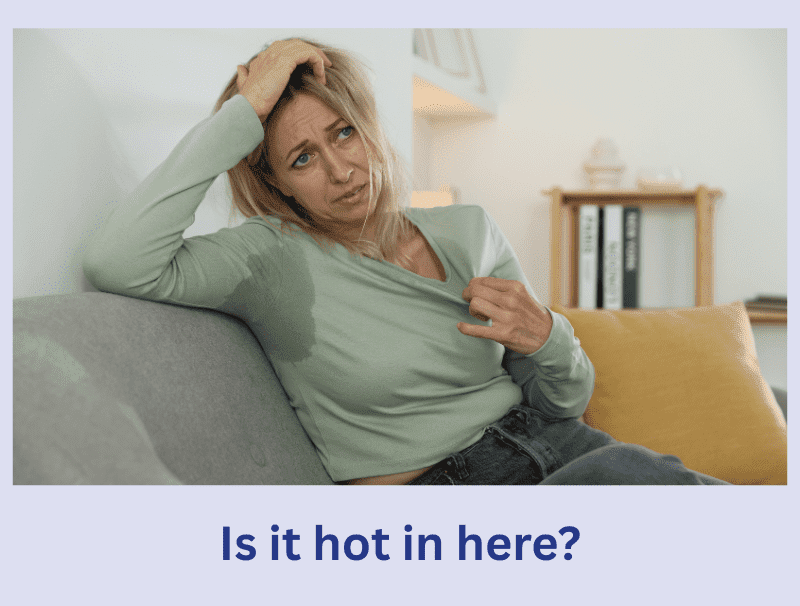
Hot Flashes 101 for Midlife Women
📖 My Story
My husband and I were having dinner in New York City with friends. We met at their apartment for a drink before heading out. As we sat around chatting, one of them handed me a glass of champagne. I took a sip—and then, out of nowhere, it hit me.
This sudden, intense heat surged through my body. I was mid-story, so I kept talking, trying to ignore it. But then the sweating started. My face was on fire. I told myself, Just power through, hoping no one would notice. Spoiler alert: they definitely noticed.
Everyone stopped and looked at me. “Are you okay?” one of them asked. Clearly, I wasn’t hiding it as well as I thought. Suddenly, it was all hands on deck. One friend rushed me over to the air conditioner. Another brought a cool washcloth. My husband handed me a glass of water.
It was a full-blown scene.
Thankfully, it passed after a few minutes, and the rest of the evening went smoothly. But that moment lit a fire in me—literally and figuratively. I remember thinking, Oh no, I’m not doing this. That experience was one of the catalysts that launched me down the rabbit hole of women’s health.
🥵 What the Heck Is a Hot Flash—and Why Does It Matter?
A hot flash is much more than just a sudden rush of warmth—it’s a full-blown physiological reaction sparked by our brain’s internal thermostat misfiring.
Here’s what’s going on, science-style:
Estrogen levels drop during perimenopause and menopause. It’s not just the low estrogen—it’s the fluctuation that really throws things off.
The hypothalamus—your body’s thermostat—is richly packed with estrogen receptors. When estrogen dips, the hypothalamus becomes hypersensitive, causing your normal temperature tolerance (the “ thermoneutral zone”) to shrink.
That small shift suddenly triggers a full-on heat response: blood vessels near the skin dilate, heart rate rises, and sweat glands go into overdrive—all in a bid to cool things down.
At the cellular level, a group of neurons in your hypothalamus gets involved. These nerve cells respond to estrogen shortages by spiking activity, triggering the rapid heat sensations characteristic of hot flashes.
Other neurotransmitters like norepinephrine (part of the fight-or-flight response) and serotonin also influence this thermostat glitch. In fact, norepinephrine levels rise right before and during flashes.
So, it boils down to this: your brain senses a slight temperature rise, but because of hormonal swings, it responds as though it’s a scorcher—flushing blood to the skin, sweating profusely, and making you feel scorching.
Want to read more? Here are some trusted resources:
- UW Medicine
- MGH Women’s Mental Health Center
- University of Rochester Medical Center
- NCBI (National Center for Biotechnology Information)
🌿 Want to Handle It Naturally? Start Here.
If you’re like me and prefer to support your body before jumping into hormone therapy, you’re not alone. There are plenty of ways to manage hot flashes naturally—starting with understanding what can trigger them.
Everyone’s body is different, but here are some of the most common hot flash triggers, and what you can do about them:
🍷 Alcohol
Alcohol—especially red wine—can dilate blood vessels and raise your body temperature, increasing the chances of hot flashes and night sweats.
Personal note: I found alcohol to be one of my biggest triggers. Since cutting it out of my regular routine, I haven’t experienced any full-blown hot flashes or those dreaded 3 a.m. wake-ups from night sweats.
(Quick note: Night sweats are essentially hot flashes that happen while you’re sleeping—and yes, they’re just as disruptive.) That one change made such a big difference, and honestly, it made the decision easier to stick with.
Try this: If you’re in a social setting, consider limiting your intake or choosing white wine or a wine spritzer, which may be less likely to trigger symptoms. Avoid alcohol close to bedtime.
🌶️ Spicy Foods
Spices like chili peppers can mimic the body’s own heat response and cause flushing.
Try this: Go light on the spice or test how your body responds to different cuisines. (Indian curry may hit differently than a jalapeño salsa.)
☕ Caffeine
Caffeine stimulates the nervous system and can raise heart rate and core temperature.
Try this: Swap one cup of coffee for a calming herbal tea like sage, peppermint, or licorice root (some of which are used to support hormonal balance).
🚬 Tobacco
Smoking not only increases the frequency and intensity of hot flashes, but also affects estrogen metabolism.
Try this: If you smoke, know that reducing or quitting can bring relief fairly quickly—not to mention the countless other health perks.
😰 Stress
Stress triggers the release of cortisol and adrenaline, which can raise body temp and narrow your thermoregulation “comfort zone.”
Try this: Deep breathing, mindfulness apps, light exercise, or even stepping outside can help regulate your nervous system.
⚖️ Excess Weight
Excess adipose tissue insulates the body and may make it harder to regulate temperature, especially during hormone fluctuations.
Try this: Incorporating more movement like walking, Pilates, or yoga can improve thermoregulation and help balance estrogen. Read more in my Midlife Weight Gain Is Common … blog.
💦 Hot Water & Environments
Things like hot tubs, steamy showers, saunas, and even long soaks in hot water can all act as triggers.
Try this: Dial down the water temp slightly, limit sauna time, or step out sooner if you feel a flash coming on.
👚 Synthetic Fabrics
Polyester, nylon, and other synthetics can trap heat and moisture, making hot flashes feel even more intense—not to mention, some of these materials may introduce unwanted chemicals to your skin.
Try this: Choose breathable, natural fabrics like cotton, bamboo, or linen—especially at night or during workouts.
👉 Curious about why materials matter? Check out my blog post Toxins & Hormones: What Midlife Women Need to Know(Part One) to learn more about how synthetic fabrics and other daily exposures can impact your health.
💡 Pro tip: Keep a simple journal (or even a phone note) for a week to track what you eat, drink, and feel when a hot flash hits. Patterns often show up quickly—and knowledge is power when you’re tuning into your body.
🌿 Additional Natural Treatments That May Help
If you’ve already made lifestyle changes—like cutting back on alcohol, managing stress, or avoiding other common triggers—you might be ready to explore deeper natural therapies that support your body’s healing from the inside out.
🧊 Cold Plunging
Cold water exposure, even in short bursts, may help your body regulate temperature and calm the nervous system. In surveys of menopausal women, nearly 30% reported fewer hot flashes after regular cold-water swimming or immersion.
Curious if it’s right for you? 👉 Read my blog on cold plunging here.
🧘♀️ Acupuncture
This has been one of my most supportive therapies. Acupuncture helps restore balance in the body, and studies show it can reduce the frequency and intensity of hot flashes.
Many acupuncturists now specialize in women’s hormonal health, and the best part? Many insurance plans cover it as a recognized treatment.
🩺 When Natural Approaches Aren’t Enough
If hot flashes are disrupting your life—whether it’s poor sleep, emotional distress, or just feeling off all the time—know that you have other options:
💊 Medical Therapies
- Hormone Therapy (HRT): Still considered the gold standard for hot flash relief when used appropriately under the care of your doctor.
- Non-Hormonal Medications: Certain low-dose antidepressants (like venlafaxine or paroxetine) have shown success in reducing hot flash frequency and severity, especially for women who can’t or don’t want to use hormones.
🌟 Bottom line?If you’ve tried adjusting your lifestyle and still feel overwhelmed by hot flashes, talk to your doctor. There are effective options out there—whether you lean natural, medical, or somewhere in between.
🔥 Who’s Most Affected by Hot Flashes?
Hot flashes affect up to 80% of women during perimenopause or post-menopause—but not everyone experiences them the same way.
Based on data from the SWAN study (Study of Women’s Health Across the Nation) and other research, here’s what we know:
- Black and Native American women tend to report the most severe and long-lasting hot flashes—often spanning 7 years or more.
- Hispanic and White women experience similar rates, but generally with less severity than Black or Native American women.
- Chinese and Japanese women report the fewest hot flashes, both in frequency and intensity.
- Beyond ethnicity, stress, anxiety, and depression can all amplify symptoms, making hot flashes feel more intense and harder to manage.
Hot flashes can start as early as your 30s, and for some women, persist well into their 60s and beyond. They’re not just a passing inconvenience—they can seriously affect sleep, mood, focus, and daily quality of life.
💬 Let’s Keep Talking About This
Hot flashes can feel isolating—but they’re one of the most common shared experiences in midlife. Whether yours come in like a wave or hit you out of nowhere (hello, champagne meltdown!), you’re not alone—and you don’t have to just “deal with it.”
There are tools, therapies, and community waiting for you. The more we talk about it, the more power we take back over our bodies and our well-being.
👋 Let’s Stay Connected
- Have your own hot flash story? I’d love to hear it—drop a comment or message me.
- Want more real talk on midlife, hormones, and health? Join my email list (through the sign-up at the bottom of each page) for honest insights, helpful resources, and the occasional laugh.
Because midlife isn’t the end of anything—it’s the start of owning your story. 🔥
Until next time, stay cool!
Linda @ Mymidlifemix