
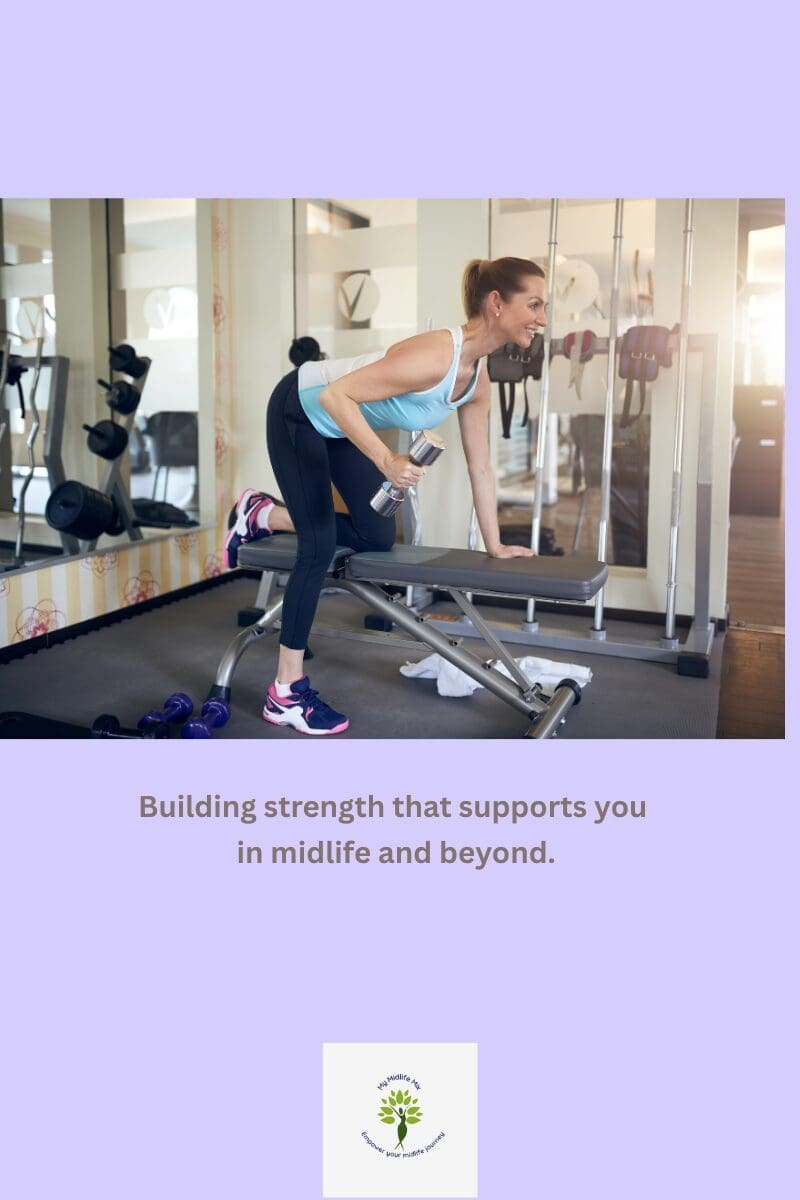
The Best Strength Training Plan for Midlife Women: Build Muscle, Protect Bone, and Stay Strong for Life
Midlife is not the time to preserve strength — it’s the time to build it.
What Is the Best Strength Training Plan for Midlife Women?
You don’t need a complicated program to see results in midlife.
The best strength plan is one you can do consistently — and one that challenges your muscles enough to actually build strength.
For most women, that means:
- Strength training 2–3 times per week
- Focusing on full-body movements
- Using weights that feel challenging (not just light reps)
- Supporting your routine with balance, mobility, and recovery
It doesn’t need to be perfect — it just needs to be something you’ll actually stick with consistently.
Why Strength Training Matters More in Midlife
“”Use it or lose it” — we’ve all heard the phrase. And when it comes to midlife muscle, it couldn’t be more true.
According to Harvard Health the average person loses 4–6 pounds of muscle per decade. That’s not just about strength — it affects everything from walking and balance to sleep quality, collagen production, and yes… even wrinkles and sagging skin.
The good news? You can absolutely do something about it.
Strength Training (The Midlife Way)
You don’t need to enter a Ms. Muscle competition (unless you want to — in which case, I’ll cheer wildly from the sidelines). But you do want to keep doing the things that matter most:
Lifting groceries… or grandkids
Getting up from a chair without bracing like a ninja
Standing still without tipping over like a toppling wine bottle
Walking with strength, stability, and a little sass
This is exactly what strength training supports in midlife — the ability to move through your day with stability, control, and confidence. That’s why your strength plan should go beyond just lifting — it should support balance, coordination, and real-life movement. Your core, legs, and arms are working together constantly, often without you even realizing it. Strength training isn’t about becoming someone else; it’s about maintaining the version of you that’s vibrant, capable, and strong.
What Does Strength Training Actually Look Like?
It’s probably not what you used to think.
It’s not about endless reps with tiny pink weights. Real change happens when you lift heavy enough to challenge your body — and your bones.
Yes, bones. Strength training doesn’t just build muscle — it places healthy stress on your bones, helping improve bone density (something many women start losing quickly in midlife).
And here’s why that matters: women can lose up to 20% of their bone density in the five to seven years after menopause. That’s not just about brittle bones — it increases the risk of fractures from everyday slips, stumbles, or even something as simple as a sneeze.
The good news? Strength training is one of the few things that can actually help slow — and even reverse — that loss. Think of every squat or deadlift as a deposit into your bone bank.
But does that mean you should grab the heaviest weight you can find?
Not exactly.
If you’re new to strength training — or it’s been a while — start small and build gradually.
New to Strength Training? You’ve Got Options
Consider a local gym, a beginner strength class, or even pitching in with a few friends to hire a personal trainer for a small group session. If you prefer to start at home, there are also plenty of high-quality strength training videos on YouTube — making it easier than ever to get started (no excuses).
You want to make sure your form is solid before you load up — because nothing sabotages your progress faster than an avoidable injury.
If you’d prefer to jump right into a simple routine, here’s a place to start.
Start Here: A Beginner-Friendly Strength Routine for Midlife Women
You don’t need a gym membership, a full rack of dumbbells, or the ability to pop up from the floor like a toddler on a sugar high. You just need consistency, good form, and a willingness to start small.
Here are 3 simple strength-building moves that deliver big midlife benefits — and they only take about 5 minutes.
If you prefer to follow a simple routine, I’ve also shared a few 10-minute bodyweight workouts in The Mix— an easy way to start building strength without overthinking it.
1. Squats (Bodyweight or with Dumbbells)
Why: Builds leg, glute, and core strength — aka, your “get-up-from-the-chair” muscles.
How:
- Stand with feet shoulder-width apart
- Sit back like you’re going into a chair
- Keep chest lifted and knees over toes
Do: 2 sets of 10–12 reps
Pro tip: Start with bodyweight. Add dumbbells when it feels too easy.
2. Wall Push-Ups or Incline Push-Ups
Why: Great for upper body strength and core activation.
How:
- Start against a wall or kitchen counter
- Hands shoulder-width apart
- Lower chest toward surface, keeping your body in a straight line
Do: 2 sets of 8–10 reps
Pro tip: As you get stronger, progress to the floor.
3. Dead Bug (Core Stability)
Why: Supports balance, posture, and keeps your back happy.
How:
- Lie on your back, arms straight up, knees bent at 90 degrees
- Slowly lower one arm and the opposite leg, keeping your core tight
- Return to start and switch sides
Do: 2 sets of 8 per side
Pro tip: Move slow and controlled. Your core will definitely feel this one.
Intermediate Strength Training for Midlife Women
Once you’ve built your foundation, it’s time to challenge yourself with some functional, full-body moves that seriously build strength, improve posture, and support your midlife metabolism.
Farmer’s Carry
Why: Builds grip, core, and total-body strength.
How:
- Grab a pair of heavy dumbbells or kettlebells
- Stand tall and walk slowly for 20–30 seconds
- Keep shoulders back, core tight, and no slouching
Goal: Work your way up to carrying ¾ of your body weight (split between both hands)
Real-life perk: You’ll never need help unloading groceries again.
Full Plank Push-Ups
Why: Builds upper body, chest, core, and shoulder stability
How:
- Start in a high plank position
- Lower your body until elbows are at 90 degrees
- Push back up in one smooth motion (no worming allowed!)
Do: 2 sets of 6–10 reps
Modify on your knees or elevate on a bench if needed while building strength.
Weighted Step-Ups with Knee Drive
Why: Trains single-leg strength, balance, and real-life power (think stairs, curbs, and hiking trails) — now with muscle-building intensity.
How:
- Hold a pair of dumbbells at your sides or wear a weighted vest.
- Step up onto a bench, box, or sturdy stair with your right leg.
- As you rise, drive your left knee up toward your chest.
- Pause, then return to start and switch legs.
Do: 2–3 sets of 8–10 per side
Pro Tip:
Use a slower tempo on the lowering phase (3–4 seconds down) to fire up your glutes and boost stability. This isn’t a cardio move — it’s strength with control.
More Than Muscle: The Bonus Benefits of Strength Training in Midlife
In addition to building muscle and strengthening bones, weight training in midlife brings a whole lineup of health perks that go way beyond the gym:
Lowers Blood Pressure
Lifting helps reduce both systolic and diastolic blood pressure — which means better heart health with every rep.
Regulates Blood Sugar
Strength training improves insulin sensitivity and helps stabilize blood sugar levels, a crucial factor in preventing midlife weight gain and energy crashes.
Supports Skin Structure
Strength training helps maintain the underlying muscle (and bone) that supports your skin, which can improve firmness and reduce the appearance of sagging over time. (If you want to go deeper on what impacts your skin in midlife, I break that down here: Midlife Skincare: 4 Lifestyle Areas That Support Healthy Aging).
Boosts Mental Health
Regular resistance training has been shown to ease symptoms of anxiety and depression — hello, mood boost!
Improves Cognitive Function
Yep, weight training is also brain training. Studies show it may help protect memory, focus, and overall cognitive health as we age.
All of these benefits — and more — are a good reason to start making strength training part of your routine.
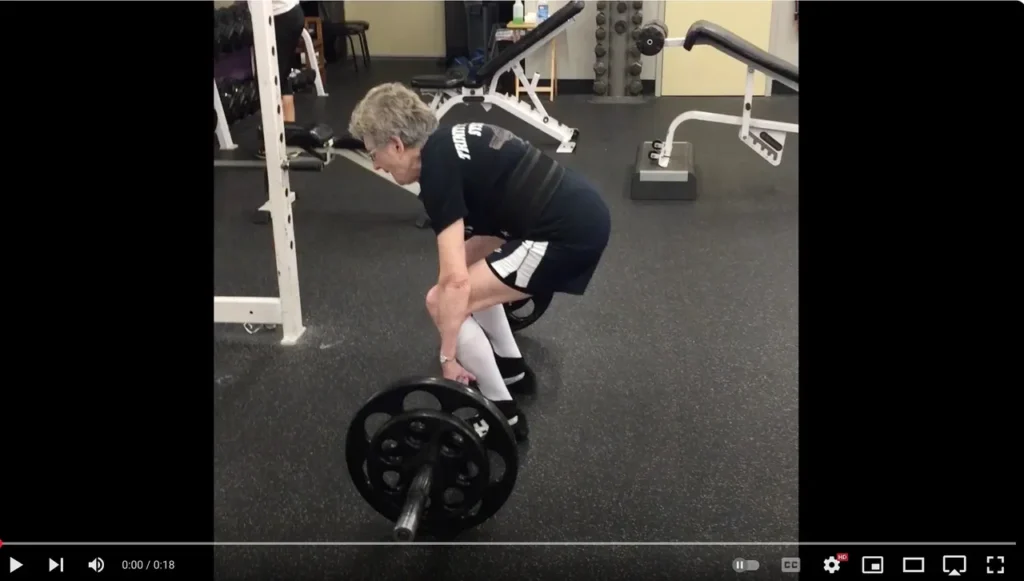
Lois-Level Motivation Incoming
Click play. Get goosebumps. Then grab something heavy.
If this doesn’t fire you up… send help.
Click Here: 👉 Watch Lois (90!) deadlift 185 lbs like a total badass
📱 Tech That Spotlights Your Strength: Favorite Apps for Midlife Weight Training
Want a little guidance in your pocket? These beginner-friendly fitness apps can help you stay consistent, track your progress, and even correct your form:
🔸 FitOn – Free and full of high-quality strength classes (with no equipment required). Perfect for at-home workouts at any level.
🔸 Future – A more personalized option that pairs you with a virtual coach to guide and adjust your workouts week to week.
🔸 Strong – Ideal for tracking sets, reps, and progress. Bonus: you’ll feel like a total pro logging your squats.
🔸 Nike Training Club – Offers strength workouts, mobility flows, and beginner plans, with options that fit busy midlife schedules.
Let’s Talk Midlife Strength
Building strength in midlife isn’t about becoming someone new — it’s about supporting the capable woman you already are.
And one of the most empowering places to begin is by understanding where you stand today.
If you haven’t already, I encourage you to explore the guide to the fitness markers every midlife woman should track for strength and longevity. These simple benchmarks offer valuable insight into balance, mobility, endurance, and overall physical capability — helping you identify exactly where your body is thriving and where it may benefit from a little more support.
Awareness creates direction — and direction is what turns intention into lasting progress.
Start there, then explore more curated resources — including the simple, 10-minute workouts I’ve shared in The Mix — to help you build strength with greater clarity and confidence.
Here’s to fewer creaky joints, more confidence, and a body that continues to support the life you want to live.

Linda, My Midlife Mix